

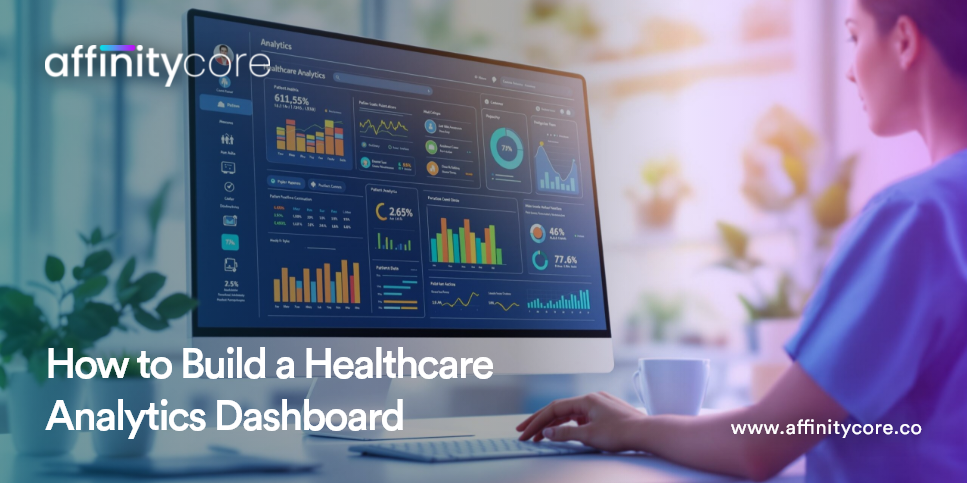
Hospitals and healthcare organizations generate massive volumes of data every day, but raw data alone does not drive decisions. Leaders need visibility, clarity, and context. That is where a healthcare analytics dashboard becomes critical. A well-designed healthcare dashboard turns complex datasets into actionable insights that executives, clinicians, and operations teams can actually use.
Whether you are building a hospital dashboard for leadership, a physician dashboard for clinical teams, or a revenue cycle dashboard for finance, the principles remain the same. This guide explains how to build a healthcare analytics dashboard step by step, what metrics matter most, and how different dashboards, from a revenue cycle management dashboard to a patient experience dashboard, serve distinct decision-making needs.
What Is a Healthcare Analytics Dashboard and Why Does It Matter?
A healthcare analytics dashboard is a centralized visual interface that displays key healthcare metrics in real time or near real time. Unlike static reports, a healthcare dashboard allows users to track trends, identify issues, and make faster decisions.
Hospitals rely on dashboards to monitor clinical quality, operational efficiency, financial performance, and patient satisfaction. A strong health dashboard reduces guesswork and replaces fragmented reports with a single source of truth. When designed correctly, a hospital dashboard aligns leadership, clinicians, and administrators around shared goals.
Defining the Purpose of Your Healthcare Dashboard
Before designing visuals or selecting tools, the first step in building a healthcare analytics dashboard is defining its purpose. Dashboards fail when they try to serve everyone at once.
A revenue cycle dashboard focuses on billing, collections, and denials. A hospital performance dashboard tracks throughput, length of stay, and capacity. A physician dashboard highlights clinical quality and patient outcomes. Each healthcare dashboard must be designed around a specific audience and decision set.
A clear purpose ensures your health dashboard drives action instead of becoming another ignored report.
Choosing the Right Metrics for a Hospital Dashboard
Metrics are the foundation of any hospital dashboard. Selecting the wrong metrics leads to noise rather than insight. The goal of a healthcare analytics dashboard is not to show everything, but to show what matters.
Operational dashboards may include bed occupancy, ED wait times, and staffing utilization. Financial dashboards emphasize claims aging and reimbursement rates. Clinical dashboards track outcomes and quality measures. A well-designed hospital performance dashboard balances leading and lagging indicators to support proactive decision-making.
Building a Revenue Cycle Dashboard That Improves Cash Flow
A revenue cycle dashboard is one of the most widely used healthcare dashboards because it directly impacts financial stability. This type of revenue cycle management dashboard tracks metrics such as days in accounts receivable, denial rates, clean claim percentage, and payer mix.
When implemented correctly, a revenue cycle dashboard highlights bottlenecks before they affect cash flow. Leadership can see trends in real time instead of reacting to month-end surprises. A strong revenue cycle management dashboard also aligns billing, coding, and compliance teams around shared performance goals.
Designing a Healthcare Analytics Dashboard for Clinical Teams
Clinical dashboards require a different design philosophy. A physician dashboard must be intuitive, focused, and clinically relevant. Overloading clinicians with financial or operational data reduces adoption.
A healthcare analytics dashboard for clinicians often includes quality metrics, patient outcomes, and compliance indicators. In research settings, a clinical trial management dashboard tracks enrollment, protocol adherence, and milestone progress. These dashboards support clinical decision-making without disrupting workflows.
Hospital Performance Dashboard for Operational Excellence
A hospital performance dashboard provides leadership with visibility into operational efficiency. Metrics such as patient throughput, discharge delays, and capacity utilization help hospitals identify inefficiencies quickly.
Unlike static reports, a real-time hospital dashboard allows administrators to intervene immediately when performance deviates from targets. When combined with predictive analytics, a hospital performance dashboard becomes a powerful tool for planning staffing, managing surges, and improving patient flow.
Patient Experience Dashboard and Quality Improvement
Patient satisfaction is now a core performance indicator for hospitals. A patient experience dashboard aggregates feedback from surveys, complaints, and engagement platforms to highlight trends in care quality.
A well-designed healthcare dashboard for patient experience helps organizations identify service gaps and measure the impact of improvement initiatives. By connecting experience data with operational metrics, hospitals can see how delays, communication, and staffing affect satisfaction scores.
Data Sources and Integration for a Healthcare Dashboard
The effectiveness of a healthcare analytics dashboard depends on the quality of its data. Dashboards typically pull from EHRs, billing systems, HR platforms, patient engagement tools, and medical devices.
Integration is one of the biggest challenges in building a health dashboard. Data must be standardized, validated, and refreshed consistently. Without strong data governance, even the best-designed hospital dashboard will produce conflicting or unreliable insights.
Choosing Visualization Tools and Healthcare Tableau Dashboards
Visualization matters. Poor design can make a healthcare analytics dashboard confusing or misleading. Many organizations use healthcare Tableau dashboards to create interactive, visually clear dashboards that support exploration and drill-down.
Whether using Tableau, Power BI, or another platform, the goal is clarity. Healthcare Tableau dashboards are popular because they allow hospitals to tailor views for executives, clinicians, and operational teams without duplicating data models. A well-designed health dashboard prioritizes readability over complexity.
Governance, Security, and Compliance in Healthcare Dashboards
Healthcare dashboards must meet strict privacy and security requirements. Role-based access ensures users only see data relevant to their responsibilities. A physician dashboard should not expose financial details, while a revenue cycle dashboard should protect patient identifiers.
Governance is equally important. Clear ownership of metrics, definitions, and refresh schedules prevents confusion. A healthcare analytics dashboard without governance quickly loses credibility, no matter how sophisticated the technology.
Scaling and Evolving Your Healthcare Analytics Dashboard
A successful healthcare dashboard is never static. As organizational priorities change, dashboards must evolve. Hospitals may start with a revenue cycle management dashboard and later expand to clinical or operational dashboards.
Scalability depends on flexible architecture and clean data models. When designed correctly, a hospital dashboard ecosystem can grow to support advanced analytics, forecasting, and AI-driven insights without constant rework.
How AffinityCore Builds High-Impact Healthcare Dashboards?
AffinityCore helps healthcare organizations design and implement dashboards that actually drive decisions. We focus on aligning data, metrics, and workflows to build healthcare analytics dashboards that leadership, clinicians, and operations teams trust.
From revenue cycle dashboards and hospital performance dashboards to physician dashboards and patient experience dashboards, AffinityCore ensures dashboards are accurate, actionable, and scalable. We combine data integration, governance, and visualization best practices to deliver dashboards that support real-world healthcare needs.
If your dashboards are underused or inconsistent, AffinityCore can help you turn data into decision-ready intelligence.
Conclusion: Turning Data Into Action With the Right Healthcare Dashboard
Building a healthcare analytics dashboard is not about technology alone; it is about clarity, purpose, and trust. When hospitals invest in the right metrics, clean data, and thoughtful design, dashboards become powerful decision-making tools.
Whether it is a revenue cycle dashboard, hospital dashboard, or physician dashboard, the right approach transforms data into action and insight into impact.
Frequently Asked Questions
Q. What is a healthcare analytics dashboard, and how is it used?
A healthcare analytics dashboard is a visual tool that displays key healthcare metrics in real time. Hospitals use it to monitor performance, track trends, and support faster, data-driven decision-making across clinical, operational, and financial areas.
Q. What is the difference between a healthcare dashboard and a health dashboard?
A healthcare dashboard typically focuses on organizational performance, such as finance, operations, and quality, while a health dashboard often focuses on patient-level or population health data. Both serve different but complementary purposes.
Q. What metrics should be included in a revenue cycle dashboard?
A revenue cycle dashboard should include metrics such as days in accounts receivable, denial rates, clean claim percentage, payer mix, and collection performance to support financial stability and proactive management.
Q. How does a hospital performance dashboard improve operations?
A hospital performance dashboard provides visibility into patient flow, capacity, staffing, and throughput. This allows leadership to identify inefficiencies quickly and make operational adjustments before issues escalate.
Q. What makes a physician dashboard effective?
An effective physician dashboard is simple, relevant, and focused on clinical outcomes. It highlights quality measures, patient trends, and performance indicators without overwhelming clinicians with non-clinical data.
Q. Why are healthcare Tableau dashboards so widely used?
Healthcare Tableau dashboards are popular because they offer strong visualization, interactivity, and flexibility. They allow hospitals to create role-based dashboards while maintaining consistent data models and governance.
Q. How do hospitals ensure data accuracy in healthcare dashboards?
Hospitals ensure accuracy by implementing data governance, validation rules, standardized definitions, and clear ownership. Without these controls, even well-designed dashboards lose trust and adoption.
Q. How does AffinityCore help build healthcare analytics dashboards?
AffinityCore helps healthcare organizations design, integrate, and govern healthcare analytics dashboards that align with real workflows, ensuring data accuracy, usability, and long-term scalability.
